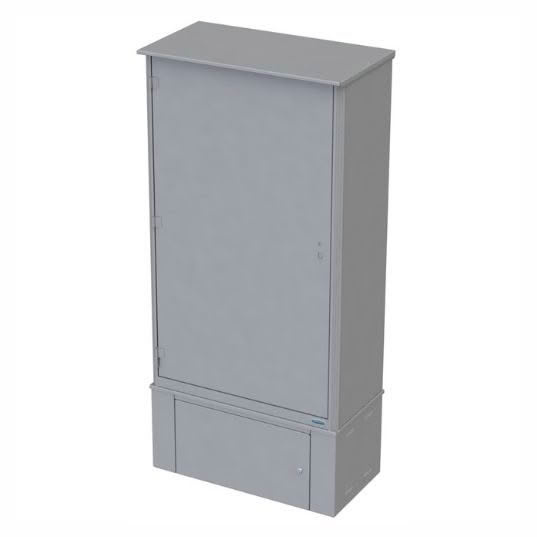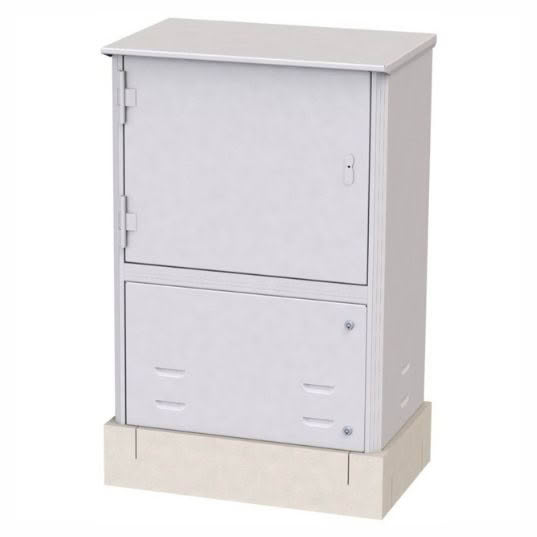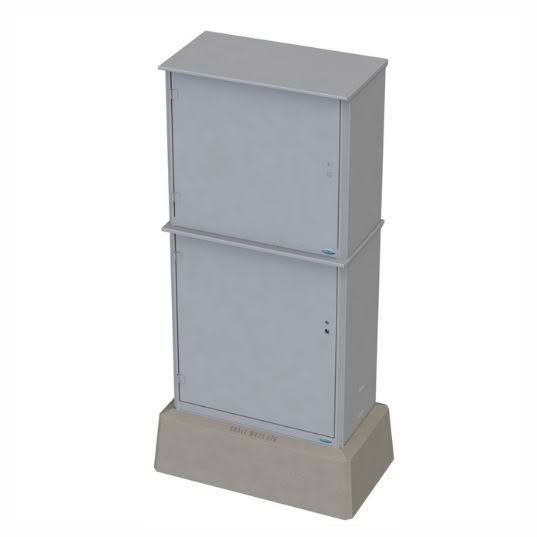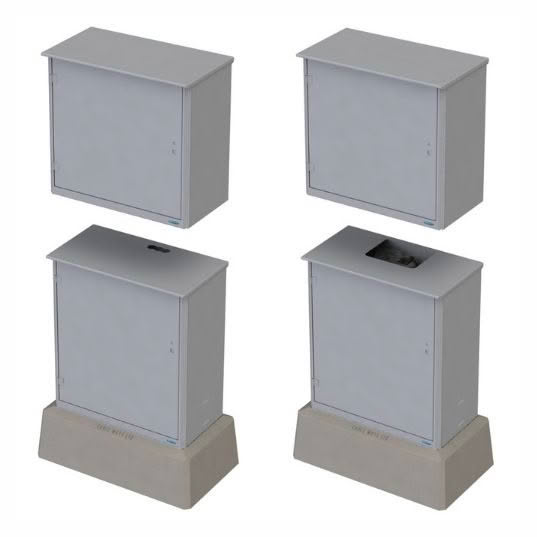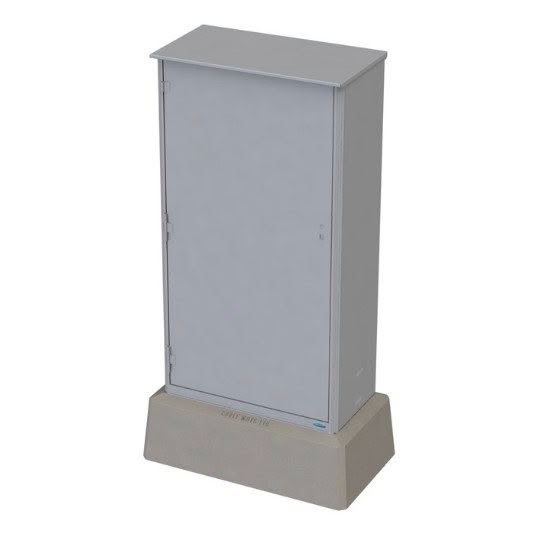
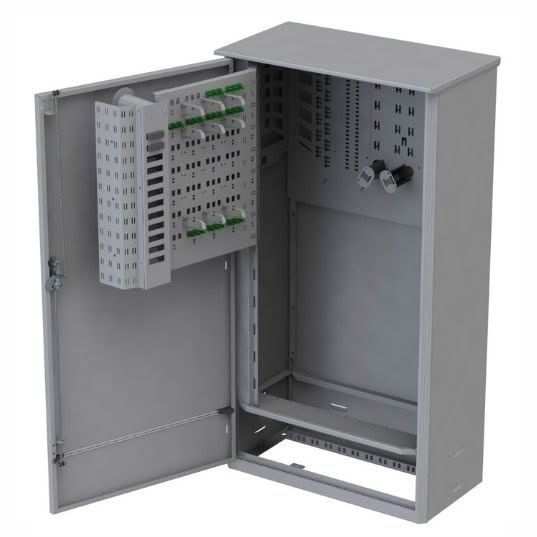
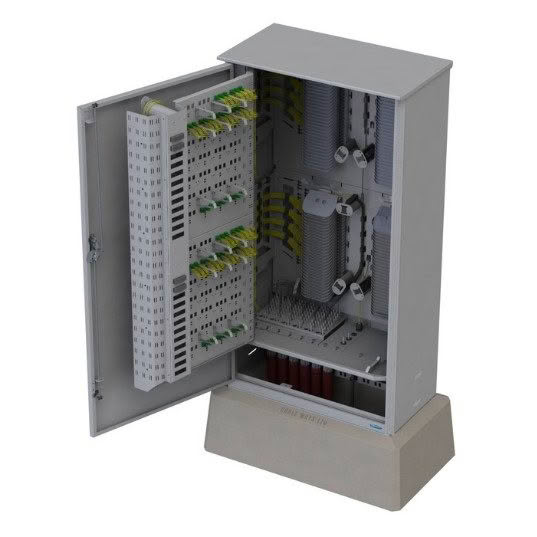
High-capacity outdoor fibre cabinet supporting configuration upgrades from 288 to 576 fibre-to-the-home (FTTH) connections by adding a new integrated skin while retaining the original connections.
Fully integrated single-door design with a plain, sealed door, constructed from 2.5 mm marine-grade aluminium and featuring secure flush-front locking.
Designed and manufactured in New Zealand for seamless network upgrades.
| Width | 800 |
|---|---|
| Depth | 400 |
| Height | 1500 |
| Rack Units | |
| Number of Bays | |
| Number of Doors | |
| Door Specs | |
| Locking System | |
| Cabinet Family | |
| Standard Features |
The Fibre Cabinet – Single Door, Fully Integrated (800 W × 400 D × 1500 H) is a high-capacity outdoor upgrade enclosure designed to expand existing fibre-to-the-home (FTTH) networks from 288 to 576 customer connections within a single consolidated cabinet. This upgrade solution allows the original 288 connections to remain in service, while a new integrated skin adds the additional 288 connection capacity, enabling seamless network expansion with minimal disruption.
Designed and manufactured in New Zealand, the cabinet is constructed from 2.5 mm marine-grade aluminium, providing excellent corrosion resistance and long-term durability for deployment in coastal, urban, and harsh outdoor environments. The cabinet features a plain, sealed single door with secure flush-front locking, ensuring controlled access and enhanced protection against dust, moisture, and environmental exposure.
The fully integrated internal layout combines fibre termination, splice management, and structured cable routing within one enclosure. The upgrade design maintains clear segregation between existing and new fibre connections, supporting efficient installation, simplified maintenance, and reduced risk during live network operations.
With its space-efficient footprint, integrated architecture, and robust aluminium construction, this cabinet is ideally suited for FTTH network upgrades requiring reliable expansion to 576 customer connections while preserving existing infrastructure and service continuity.